

The Complete Indian Home Lighting Guide: How Much Light Does Every Room Actually Need?
Lighting is one of those things that I usually don’t think about until the lighting in a room makes the space dim, harsh or uncomfortable. Eventually, I realized there’s more to choosing the appropriate light…
Lighting is one of those things that I usually don’t think about until the lighting in a room makes the space dim, harsh or uncomfortable. Eventually, I realized there’s more to choosing the appropriate light than picking the right bulb with the correct wattage. Factors such as the size and purpose of the room, amount and quality of natural light in the room, color of the wall and even the height of the ceiling can impact the level of light a room requires.
Therefore, I find a home lighting guide more useful when considering each room individually as opposed to a general rule of thumb. Depending on the purpose and use of each room, I try to find a balance between visibility, comfort and energy efficiency. The internet is full of “X number of light bulbs” lists, but reaching that goal isn’t as important to me as having the right bulb to meet the needs of each room based on usage.
Start With Lumens, Not Just Wattage
The first thing I look at now is lumens.
Wattage tells me how much power a light uses, while lumens tell me how much visible light it produces. This makes lumens much more useful when comparing modern LED lights.
As a rough rule, I think in terms of how much total light the room needs rather than how powerful one bulb sounds.
For a small room, a lower lumen output may be enough. A larger living room or kitchen may need several light sources working together.
This simple shift makes planning lighting for different rooms much easier.
Living Room: Aim for Flexible, Layered Brightness
More flexibility is needed in a living room than in other spaces in a home.
I would design around 1,500 to 3,000 lumens, depending on the size of the room, and the amount of natural light it gets.
I would not, however, put all of those lumens in one central fixture.
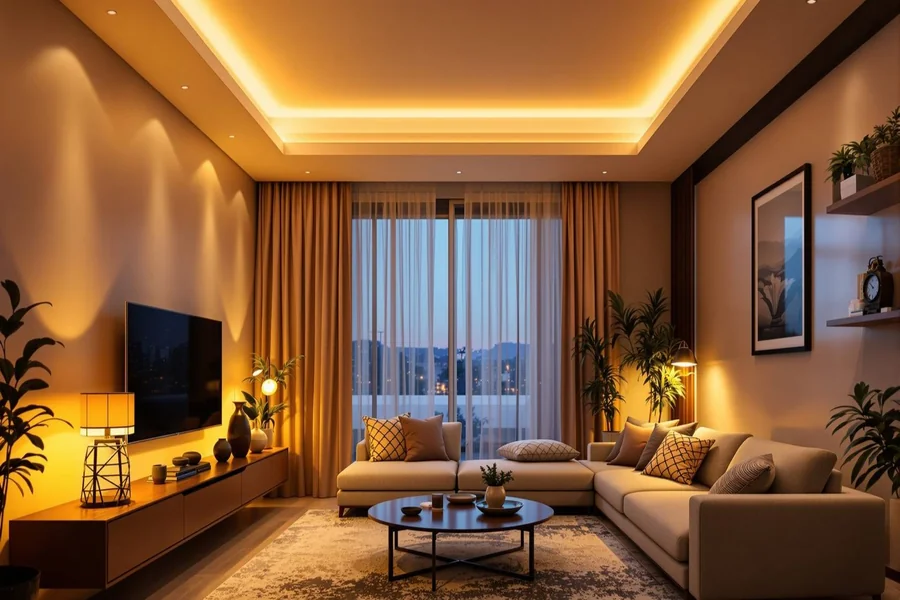
For a more attractive and functional design, I would combine ceiling lights, wall lights, and some types of accent lighting. In order to suit a variety of uses.
As far as I’m concerned, the ideal living room design has variable lighting, depending on what’s going on in the room. For example, bright lighting when guests are present and soft lighting when the inhabitants are relaxing.
Bedroom: Softer Light Usually Works Better
Intensity in a bedroom should be significantly less than in a kitchen or a work area.
An average bedroom normally requires 1000 to 2000 lumens of light total.
For general lighting in a bedroom I would typically recommend 1000 to 2000 lumens. If more light is needed for tasks then an additional light should be used next to the bed.
I prefer softer lighting overall in the evenings.
One very bright source is usually uncomfortable. Using a couple of wall or bedside lamps to light a room is usually more pleasant than one very bright ceiling light.
I am also a proponent of having adjustable lights in each room. So using dimmable or smart light switches in each room would give you the flexibility to use bright lighting while getting ready to do your make up for example and relax with softer lighting to watch a movie.
Kitchen: Prioritise Clarity and Task Lighting
Smart and efficient lighting is important in every room, but in the kitchen I would never compromise on brightness. Food needs to be chopped, prepared and cleaned up and all this requires excellent visibility. Depending on the size of the kitchen I would typically look for total lights in the range of 3,000-4,000 lumens.
Brighter lighting is preferable. General ceiling lights should be complemented with focused lights over the work surface and the cooking area. Different rooms benefit from different styles of lighting. Lighting for each room should not be designed according to the same formula. Soft lighting is appropriate for bedrooms. Clarity is more appropriate for kitchens.
Dining Area: Comfortable, But Not Too Dim
I’m trying to create adequate lighting to see food clearly in the dining area without making it too harsh.
Around 1,500 to 3,000 lumens can be effective, depending on the size of the space.
Generally, I use warmer or neutral light sources here as it creates a more inviting environment for meals and gatherings.
With a pendant light over the table, I usually consider that the focal light source and use softer light in the surrounding area.
Focusing the light in one particular area creates a better design effect than uniform lighting throughout the entire space.
Study or Home Office: Focus Matters More
Strong task lighting is important for a home office or study room.
I would generally aim for a total of 2000 to 4000 lumens, depending on the size of the room. I’d also add a desk lamp which would give additional lighting for close work.
Neutral or cooler white light is also good for work areas as it gives a greater feeling of clarity and seems more energizing.
Adjustable light bulbs allow me to use higher intensities of light when doing concentrated tasks and reduce light intensity for less demanding tasks.
Have a smart and efficient light for each room also allows me to adjust the intensity of light depending on my needs.
Bathroom: Bright but Even
bathroom lighting must be even and clear to eliminate shadows.
For a regular bathroom 1500-2500 lumens is a good starting point.
When possible I suggest using both overhead lights and mirror lights. Shadows around the face make grooming more difficult.
I prefer even lighting over aesthetics here.
I think in this case even lighting is more important than decorative lighting.
Balcony and Passage Areas Need Less Light
Passages, balconies and utility spaces usually need far less brightness than main rooms.
I would generally choose enough light for safe movement rather than trying to illuminate these areas like a living room.
This keeps the setup efficient and avoids unnecessary glare.
It is also a reminder that a good home lighting guide should help reduce over-lighting, not just tell me where to add more fixtures.
I Prefer Building Lighting Around Each Room’s Purpose
The most important thing I’ve learned is to take a different approach to each room.
In a bedroom I might use soft, layered lighting and in a kitchen I might use stronger, task-oriented lighting. A living room might require flexible lighting to address various functions. A simple, functional light is appropriate in a hall or passage.
Every room needs a different design approach.
I prefer to take a broader look at a space.
I like to think about overall brightness, the color of the light, and how people use the room.
To me, the best lighting design is to have the appropriate and sufficient light for the function of each room without making the space feel overly lit and without wasting energy.
A well designed lighting system can meet the function of each space to improve the comfort of daily life and enhance the experience of using the space.