

How to Check a Mole at Home: 5 Warning Signs You Shouldn’t Ignore
Most people have moles, and most are harmless. But a mole that changes appearance or behaves differently from others deserves attention. Learning how to check your skin can help you recognise possible warning signs and…
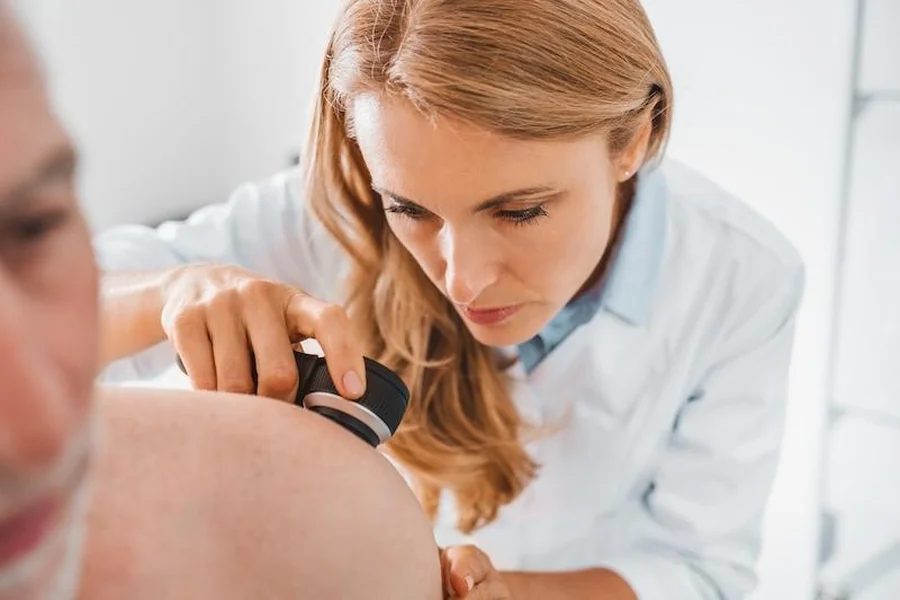
Most people have moles, and most are harmless. But a mole that changes appearance or behaves differently from others deserves attention. Learning how to check your skin can help you recognise possible warning signs and know when to seek medical advice.
Regular self-examinations, dated photographs and digital tools can support skin awareness. None, however, can replace a professional assessment when a spot looks suspicious.
1. Know the ABCDE Warning Signs
Dermatologists commonly use the ABCDE rule to explain features that may warrant a closer look:
A — Asymmetry. One half of the mole looks noticeably different from the other.
B — Border. Edges appear irregular, notched, blurred or uneven.
C — Colour. The spot has several shades or an unusual distribution of colour.
D — Diameter. Melanomas are often larger than 6 mm when diagnosed, but they can be smaller. Size alone is not a reliable test.
E — Evolving. The mole changes in size, shape, colour or symptoms, such as new bleeding or itching.
Not every melanoma follows the ABCDE pattern. A new mark, or a spot that looks unlike your other moles—the “ugly duckling” sign—can also be important.
2. Check Your Skin Systematically
Choose a well-lit room and use a full-length mirror plus a handheld mirror to examine your body. Look at your face, arms, torso and legs, then check areas that are easier to miss: your scalp, back, behind your ears, between your toes, soles and under your nails.
The aim is to learn what is normal for your skin so that new or changing marks are easier to notice. If you have many moles, a history of skin cancer or other risk factors, ask a clinician how frequently you should check your skin.
3. Take Clear Photos to Document Change
Descriptions of the exact appearance of a mole can be inaccurate. Photographs can assist you to record the changes you see and explain them at a doctor appointment.
Light levels should be consistent, no filters, some surrounding skin and the date recorded. Take a picture of the same spot again at the same level, and at the same angle. It may be helpful to have a ruler by the mole to get a size reference point.
Photographs are reporting and not a delay to care. If there is one that is already alarming, have it assessed medically instead of getting any more comparison images.
4. Use Online Mole Checkers With Care
Online mole-checking tools may help people learn about visible skin features and organise questions before a consultation. They can make skin awareness more accessible, especially for someone unsure what the ABCDE signs mean.
For example, ScanSkinAI provides a free-to-start AI-powered mole-checking experience with photo-based screening information and options for monitoring skin changes.
These tools have limits. Lighting, camera quality, skin tone and lesion appearance can affect image-based assessments. An AI result cannot confirm or rule out melanoma, and a reassuring result should never override a changing spot or concerning symptoms.
5. Know When to See a Healthcare Professional
Contact the GP or dermatologist if a mole changes in size, shape or colour that causes pain or itching; that bleeds or crusts; or if an unusual new mole is not going away. If it’s a spot that’s not like the rest of your moles, it’s also a reason to discuss it.
A dermatologist can use the dermoscopy to look at the area further and determine if a biopsy or specialist referral is necessary. If there are worrying symptoms, or changes that are happening quickly, do not repeat the online scan, but seek early advice.
Can an Online Mole Checker Diagnose Skin Cancer?
No. AI screening with pictures provided by custom software can give information about education but it cannot make a definite diagnosis. There are several types of skin cancer, each of which can look differently; and some non-cancerous spots can appear scary. A biopsy and clinical assessment are still very necessary, especially if applicable, though.
Make Skin Awareness Part of Prevention
In combination with sensible sun habits and prompt medical treatment, self-examination is most useful. Minimize unneeded UV radiation, steer clear of tanning beds and provide wise sun protection. Skin cancer can occur in any skin color, on areas that do not usually get sun exposure.
The top skill is just one – awareness – notice changes, make a note of that and call professional help if it looks a bit unusual. While technology is useful for raising awareness, it is not a replacement for clinical judgement.
Medical disclaimer: This is for general information only and should not be considered medical advice, diagnosis or treatment.