

Next-Generation Clinical Trial Models in Cancer Treatment
The last ten years have seen a rapid development in cancer treatment due to the achievements of genomics, immunotherapy, and targeted medicine. However, in spite of such innovations, the traditional clinical trial structure has not…
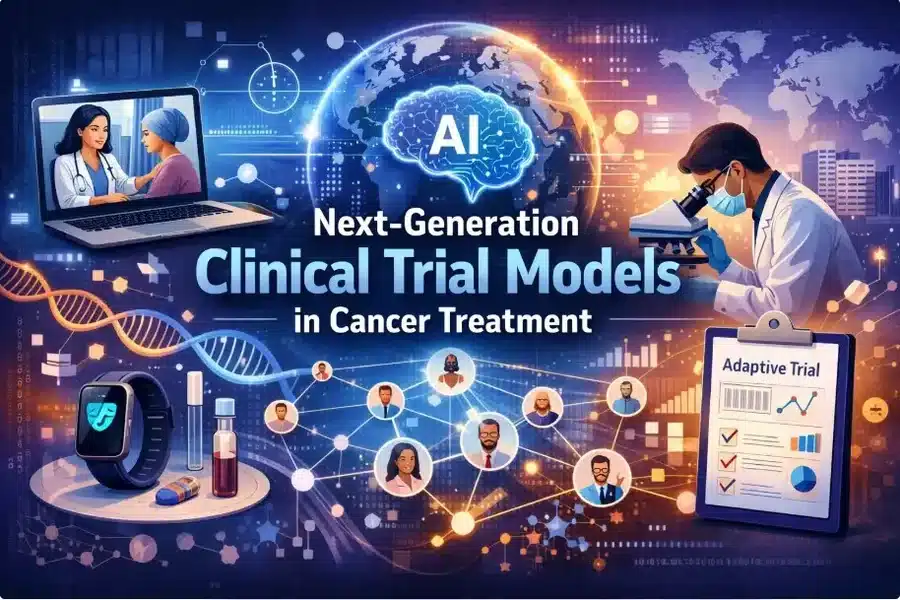
The last ten years have seen a rapid development in cancer treatment due to the achievements of genomics, immunotherapy, and targeted medicine. However, in spite of such innovations, the traditional clinical trial structure has not been able to keep up. The time-consuming nature of recruitment processes, restricted accessibility, and inflexible procedures are also common factors that deny patients access to the latest treatments.
Such a gap has enhanced the creation of new-generation clinical trial models/approaches that are faster, smarter, and more patient-centered.
Why Conventionally deployed clinical trials are no longer sufficient.
The traditional method of clinical trials is usually centralized and patients are forced to travel many times in pursuit of assessment and treatment. This poses great limitations to many cancer patients particularly those who do not reside in major medical hubs.
In addition to accessibility, the traditional trials are usual in their slowness in enrollment and their scarcity in participants. These hard line systems do not represent actual patient populations as the research of cancer becomes more personalized.
The contemporary oncology is now in need of trial structures that are adaptable, global and digitally empowered.
From Centralized to Decentralized Trials
One of the most important shifts in recent years has been the rise of decentralized and hybrid clinical trials. Instead of relying solely on physical research centers, decentralized trials incorporate:
- Remote monitoring through wearable devices
- Telemedicine consultations
- Home-based sample collection
- Digital data reporting
These models reduce patient burden while allowing researchers to gather continuous real-world data. Hybrid approaches combine traditional clinic visits with remote participation, offering a balanced solution that preserves clinical rigor while improving accessibility.
Patient-Centered Research: A New Design Philosophy
Modern clinical trials are increasingly built around the patient experience rather than institutional convenience.
This patient-centered approach focuses on:
- Simplifying participation requirements
- Reducing travel and wait times
- Improving communication and transparency
- Integrating quality-of-life metrics into outcomes
By prioritizing comfort and convenience, researchers see higher retention rates and more representative study populations, both critical for meaningful cancer research.
Precision Medicine and Personalized Oncology
Precision medicine has turned the cancer treatment into a different approach. Clinicians no longer use universal therapies but customize treatment according to genetic indicators, tumor phenotypes and idiosyncratic biology.
The clinical trials have significant implications as a result of this personalization. There is an increasing specificity in the eligibility criteria and this needs more sophisticated matching systems to match patients with highly specific studies. The use of genomic profiling, immunotherapy pipelines and biomarker-driven trials all require smarter infrastructure to run at scale.
The Role of Global Trial Networks and AI Matching
Access to innovation should not depend on geography. That reality has fueled the growth of global clinical trial networks supported by artificial intelligence.
Platforms working with international oncology clinical trials increasingly rely on AI-powered matching to connect patients with relevant studies across borders. These systems analyze medical records, molecular data, and trial criteria to dramatically reduce the time between diagnosis and trial enrollment.
Organizations such as Massive Bio help operationalize this model by leveraging data-driven technology to expand trial accessibility and streamline patient identification worldwide. The result is faster recruitment, greater diversity, and improved chances for patients to access emerging therapies.
Emerging Models: Virtual Trials, Real-World Evidence, and Adaptive Protocols
New experimental structures are also coming to the field of next-generation oncology:
Virtual Trials
There are studies that are nearly conducted exclusively online, consent being remote, monitored and even followed up.
Real-World Evidence (RWE)
The information that is gathered beyond conventional trials include electronic health records and wearable devices gives important information on the effectiveness of treatments in real-life scenarios.
Adaptive Trial Designs
Through these protocols, researchers can adjust parameters of the study on the fly depending on the interim results speeding up development without sacrificing the safety standards.
The combination of these models reduces the development cycles and enhances decision-making during the course of the research.
Regulatory Oversight and Ethical Considerations
Innovation does not replace responsibility. As trials become more digital and decentralized, regulatory bodies are evolving their frameworks to address:
- Data privacy and cybersecurity
- Digital informed consent
- Cross-border compliance
- Algorithmic transparency
Maintaining patient trust remains essential. Ethical oversight ensures that technological progress aligns with safety, equity, and scientific integrity.
What This Means for the Future of Cancer Treatment
Next-generation clinical trial models are not just upgrades in the operational sense, but they are a new vision of the way cancer care should evolve.
Experimental therapies become accessible to the patients more quickly. Depending on the research purpose, researchers have access to richer and more diverse datasets. Development of pharmaceuticals is more effective and open to the world.
Above all, more equitable oncology ecosystem is achieved by subjecting most people who had not been included in clinical research to innovation.
The field of cancer research is at a new stage of development, with such concepts as decentralization, artificial intelligence, and personalized medicine. Clinical trials are becoming more flexible to patient needs and scientific complexity as they are no longer confined to old paradigms of clinical trials.
Not only are these next-generation models enhancing the manner in which studies are being conducted but they are also changing the future of cancer treatment itself.