

ConsentBit vs Cookiebot: Which Cookie Consent Tool Is Better?
Consentbit Cookiebot: [[ZAPIMG0]]Grow Your Website With BacklinksImportant: A consent management platform can support cookie-consent requirements, but it…
Grow Your Website With Backlinks
| Important: A consent management platform can support cookie-consent requirements, but it does not make an organization fully compliant by itself. Privacy obligations vary by location, data practices, and legal interpretation. Confirm your configuration with qualified privacy or legal counsel when needed. |
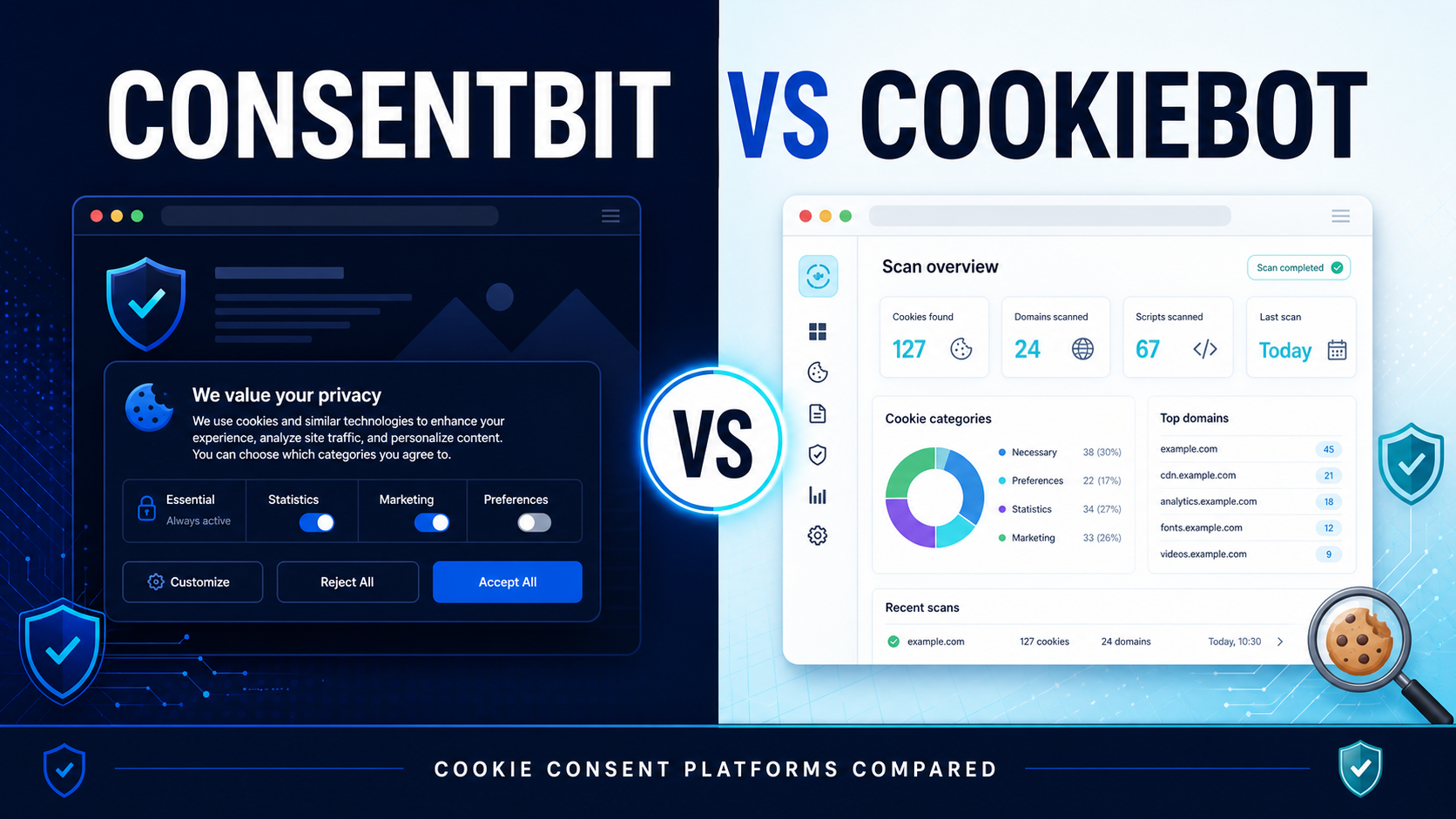
ConsentBit and Cookiebot both help website owners collect visitor choices, block non-essential tracking until consent, and maintain consent records. Their core job is similar, but their product strategies are different. ConsentBit emphasizes quick setup, extensive banner styling, platform-friendly installation, and simple flat pricing. Cookiebot emphasizes automated scanning, broad regulatory support, integrations, regional configuration, and a pricing structure that scales with domains and subpages.
For a small Webflow, Framer, or custom website, ConsentBit may be the easier and more predictable choice. For a larger organization with many pages, regions, languages, marketing systems, or formal reporting requirements, Cookiebot has the broader ecosystem. The right answer depends less on which banner looks better and more on how complex the tracking environment is behind it.
Quick Verdict
Choose ConsentBit when you want a streamlined cookie-consent platform with one advertised plan, unlimited pageviews, banner customization, consent logs, automatic script blocking, and an approachable setup process. Choose Cookiebot when you need a mature CMP with recurring cookie scans, detailed reporting, more than 47 supported languages, regional banner rules, multiple-domain controls, Google Consent Mode, and established integrations for WordPress, Wix, Shopify, and other systems.
Cookiebot offers the stronger free entry point for a very small website, while ConsentBit offers the simpler paid calculation. Both require proper implementation and ongoing review. A banner that is installed incorrectly, misses scripts, or uses misleading choices can still create compliance and analytics problems.
ConsentBit vs Cookiebot at a Glance
| Category | ConsentBit | Cookiebot |
| Best for | Smaller sites, designers, and straightforward deployments | Growing sites, international teams, and complex tracking stacks |
| Starting point | $8 per website/month advertised | Free for one domain with up to 50 subpages |
| Pricing model | One-plan, per-website pricing | Premium tiers based on domains and subpage count |
| Scanning | Automatic cookie and script scanning advertised | Automated monthly cookie and tracker scanning |
| Customization | Strong banner styling, layouts, colors, and behavior controls | Templates plus premium branding and layout controls |
| Languages | Multiple languages supported | More than 47 languages advertised |
| Regional controls | Region-aware consent behavior advertised | Regional and country banner distribution on premium plans |
| Key advantage | Simplicity and predictable paid pricing | Automation, scale, integrations, and reporting depth |
ConsentBit
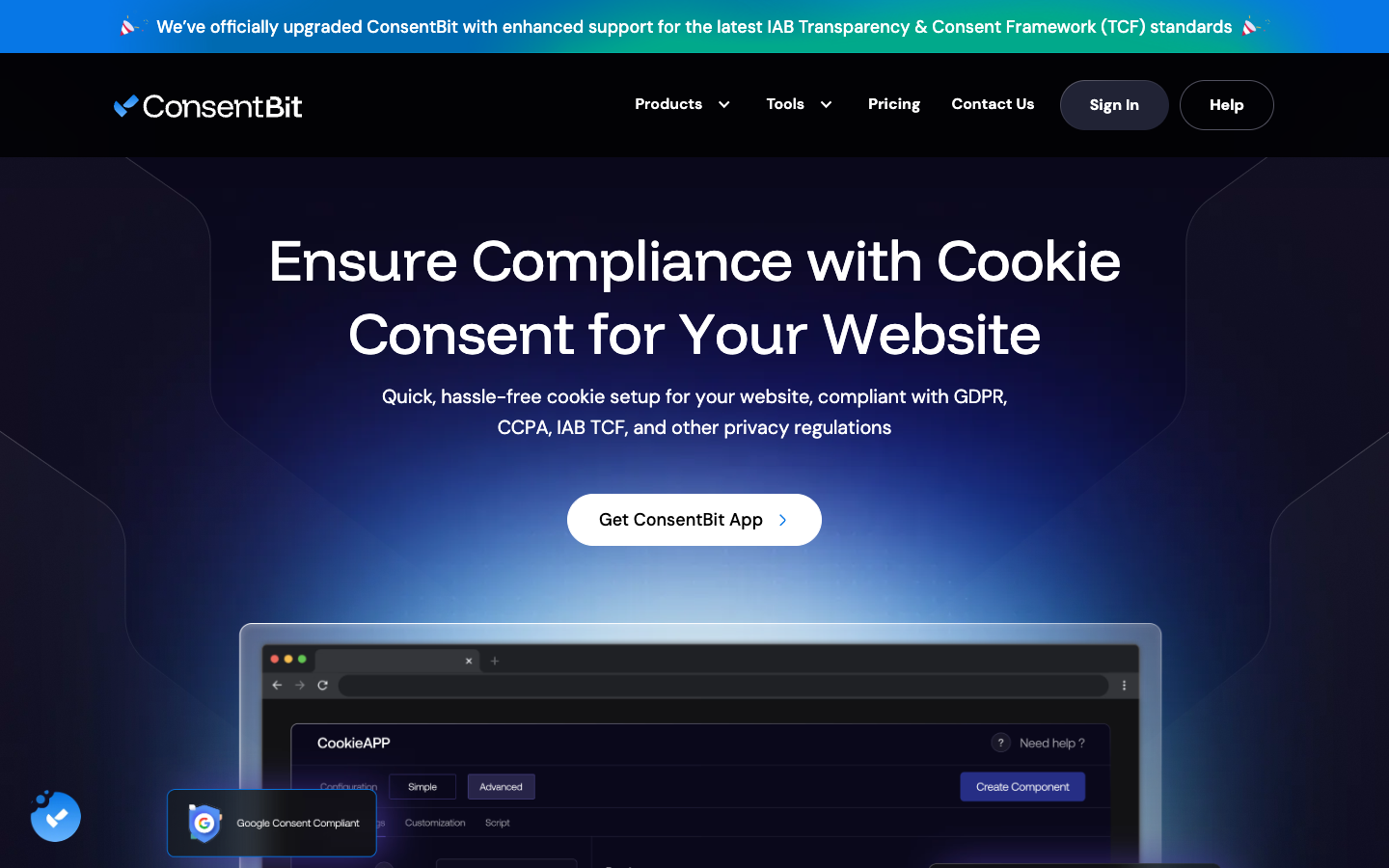
ConsentBit is a cookie-consent platform built around fast implementation and visual control. The service began with a strong Webflow focus and now advertises support for Webflow, Framer, major CMS platforms, custom applications, and general website stacks. Its setup flow centers on adding a script, configuring the consent experience, previewing it, and publishing the banner.
The platform advertises automatic detection of cookies and scripts, blocking of non-essential trackers before approval, consent logging, geographic rules, Google Consent Mode v2 support, IAB TCF support, and data export for audits. Website owners can change colors, text, button configuration, layout, orientation, theme, and animation. That emphasis makes ConsentBit attractive to designers who want the banner to feel native to the site rather than like a generic compliance overlay.
ConsentBit displays one plan at $8 per website per month, with annual savings available. The listed plan includes the cookie policy and banner, automatic script blocking, multiple languages, unlimited pageviews, customizable choices, and installation help. The company asks multi-site customers to contact support for pricing. It does not currently advertise a permanent free plan.
ConsentBit strengths
- Simple advertised price per website with unlimited pageviews.
- Strong visual customization for layouts, colors, text, buttons, and themes.
- Cookie scanning, script blocking, consent logs, and audit exports.
- Support for Webflow, Framer, CMS platforms, and custom websites.
- Google Consent Mode and IAB TCF support advertised.
- Installation help is included in the listed subscription.
ConsentBit limitations
- No permanent free plan is advertised.
- Its ecosystem and public integration library are smaller than Cookiebot’s.
- Multi-site pricing requires a conversation rather than a public tier table.
- Teams should test language detection, regional rules, and every blocked script themselves.
Cookiebot
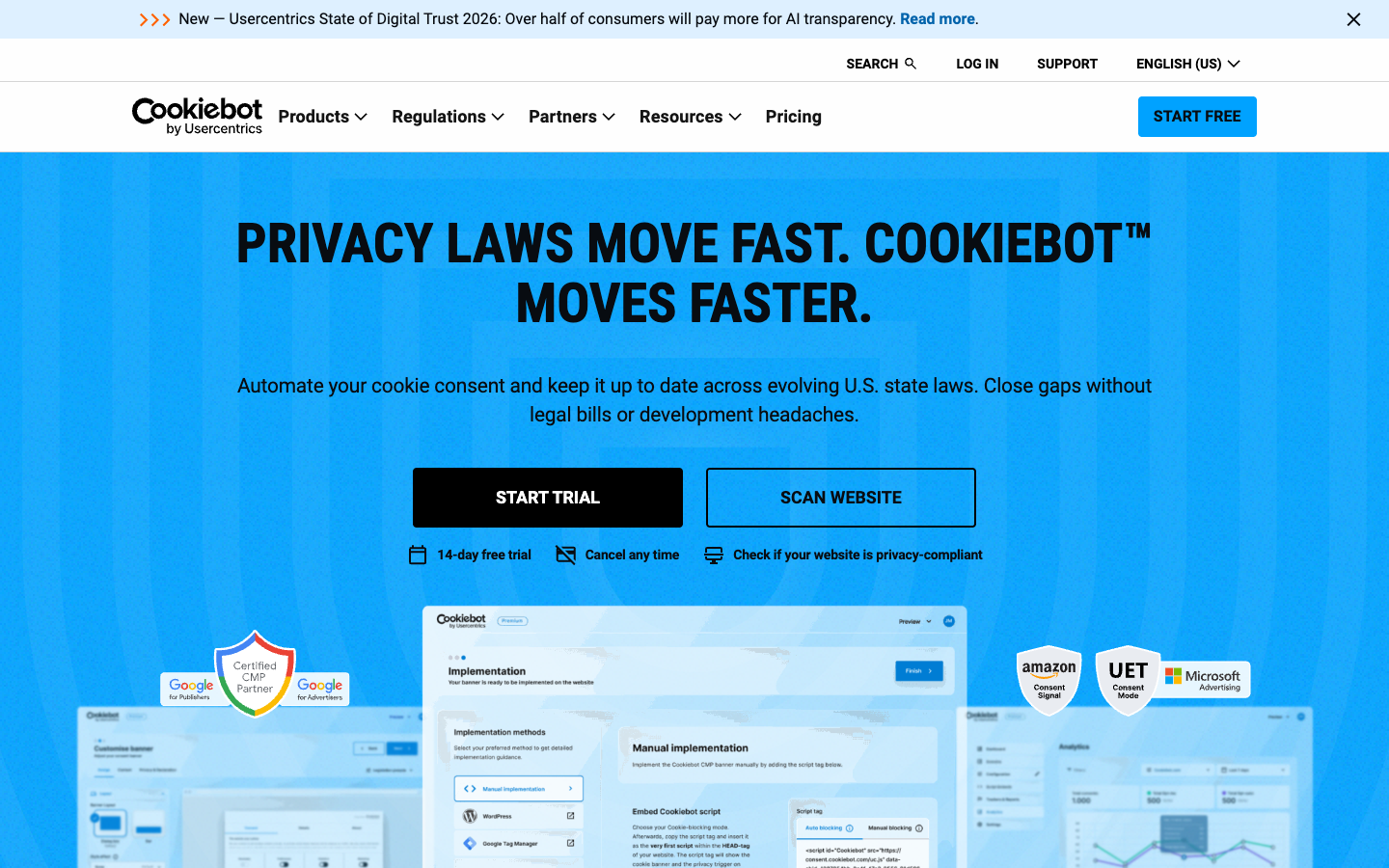
Cookiebot is a consent management platform from Usercentrics. It is positioned as an automated solution for identifying cookies and trackers, collecting consent, signaling visitor choices to advertising and analytics systems, and keeping consent records. The platform has dedicated integrations and products for WordPress, Wix, Shopify, and other common website environments, along with manual installation options.
A defining feature is automated website scanning. Cookiebot says its patented scanner checks a website monthly to identify and classify cookies and trackers. Premium plans add advanced reporting, branding controls, multiple-domain management, geographic banner distribution, and support for more than 47 languages. The product also supports Google Consent Mode and numerous international and U.S. privacy frameworks.
Cookiebot’s free plan covers one domain with up to 50 subpages and includes an initial cookie and tracker scan plus automated configuration. New users receive a 14-day premium trial. Paid tiers are based on the number of domains and subpages, with published prices ranging from Lite through Extra Large. This model can be efficient for a small site, but owners of several large domains must calculate the complete account cost rather than comparing only the lowest displayed tier.
Cookiebot strengths
- Free option for one small website with up to 50 subpages.
- Automated recurring scanning and cookie classification.
- Broad integrations and manual implementation choices.
- More than 47 languages plus regional banner distribution.
- Multiple-domain controls and advanced automated reporting.
- Established Google Consent Mode and advertising ecosystem support.
Cookiebot limitations
- Pricing becomes more complex as domains and subpages increase.
- Full banner branding and advanced controls require a premium plan.
- Large sites must understand how unique URLs affect plan eligibility.
- The broader dashboard can be more than a small brochure site needs.
Setup and Ease of Use
ConsentBit is designed to feel direct: create the site, customize the banner, add or publish the script, and validate the result. Its Webflow and Framer positioning is especially useful for no-code designers who want to stay within a familiar workflow. Cookiebot also offers a quick script-based setup, but its larger collection of controls, integrations, scanning results, and regional options creates more configuration decisions.
Ease of installation is not the same as implementation quality. After installing either tool, test the site in a private browser session before accepting cookies, after rejecting optional categories, and after changing preferences. Confirm that analytics, advertising pixels, embedded media, chat widgets, and other non-essential services behave according to the chosen consent state.
Cookie Scanning and Script Blocking
Both products advertise cookie scanning and prior blocking. Cookiebot has the more established automation story, including monthly scans that identify and categorize new trackers. ConsentBit advertises automatic scanning and blocking as part of its simpler package, along with manual updates for scripts that need attention.
No scanner should be treated as infallible. Single-page applications, scripts loaded through tag managers, authenticated areas, delayed embeds, and region-specific services can escape a basic crawl. Review scan results against the actual tag manager, source code, plugins, and network activity. Re-test after marketing or development teams add a new tool.
Customization and User Experience
ConsentBit is the stronger choice when visual control is a priority. Its public site emphasizes multiple layouts, orientations, colors, button configurations, animations, and light or dark themes. Cookiebot supports templates and premium customization, including logos and brand styling, but its main advantage is operational depth rather than design-first positioning.
Whichever platform you choose, make accepting and rejecting non-essential cookies comparably clear. Avoid preselected optional categories, confusing button labels, or visual treatments that pressure visitors toward acceptance. Good consent design supports informed choice and keeps the preference center easy to reopen.
Pricing Comparison
ConsentBit’s published offer is straightforward: $8 per website per month, with annual billing and multi-site pricing available. The plan advertises unlimited pageviews, so traffic growth does not automatically move a site into a higher usage tier. This makes budgeting simple for a small business, agency client, or content website.
Cookiebot offers more ways to start. Its free plan supports one domain and up to 50 subpages. Premium plans are priced by domain and subpage count, with listed tiers beginning at $8 and increasing for larger sites. Cookiebot says it does not charge based on pageviews. A small site may spend nothing, while a large multi-domain account can cost substantially more than the entry tier. Count real indexable and utility URLs before choosing a plan.
Integrations, Languages, and Scale
Cookiebot wins for integration breadth and global scale. The platform has dedicated pathways for popular CMS and commerce products, supports more than 47 languages, manages multiple domains, and can distribute different banner rules by country or region. These capabilities matter for companies operating several brands or serving audiences across multiple legal jurisdictions.
ConsentBit supports multiple languages, regional behavior, Webflow, Framer, CMS platforms, and custom sites. It may be sufficient for many smaller teams, especially when the priority is a clean deployment rather than a large compliance operations layer. Agencies should test how efficiently either product handles duplicating configurations, assigning staff access, exporting logs, and maintaining client sites.
Which One Should You Choose?
Choose ConsentBit if you want:
- One simple paid plan and predictable per-site budgeting.
- A highly customizable banner for a design-focused website.
- Fast Webflow or Framer implementation.
- Consent logs, audit exports, scanning, and script blocking without a large dashboard.
- Included installation assistance when setup becomes confusing.
Choose Cookiebot if you want:
- A free option for one website with no more than 50 subpages.
- Recurring automated scans and mature cookie classification.
- Broader CMS, ecommerce, advertising, and analytics integrations.
- Advanced reporting, multiple domains, and regional banner distribution.
- A CMP designed for multilingual or more complex organizations.
Frequently Asked Questions
Is ConsentBit cheaper than Cookiebot?
ConsentBit is easier to budget at its advertised $8 per website per month. Cookiebot can be cheaper for a qualifying small site because it offers a free plan, but premium costs increase according to domain and subpage requirements.
Does Cookiebot have a free plan?
Yes. Cookiebot advertises a free plan for one domain with up to 50 subpages. New accounts also receive a 14-day trial of premium features. Confirm current limits before publishing a production banner.
Does ConsentBit work outside Webflow?
Yes. ConsentBit now describes itself as platform-agnostic and supports Framer, major CMS platforms, custom applications, and general website stacks in addition to Webflow.
Will either tool make a website fully compliant?
No tool can guarantee complete compliance by itself. A CMP addresses consent and tracking controls, but organizations still need accurate privacy notices, lawful data practices, security controls, request procedures, vendor agreements, and configurations suited to the applicable laws.
Final Verdict
ConsentBit is the better fit for website owners who value speed, design control, and a simple monthly price. Cookiebot is the stronger choice for teams that need mature automation, recurring scans, international support, complex integrations, and multi-domain administration. For a small design-led site, start with ConsentBit. For a growing business with a complicated marketing stack, Cookiebot’s additional depth is likely worth the extra setup and pricing complexity.