

What Is the Mercedes 250GD Wolf and Why Are Collectors Paying Attention?
A military-spec truck isn’t usually where luxury collector interest begins. But the Mercedes-Benz 250GD Wolf has become one of the more sought-after platforms in the classic four-wheel-drive segment — and the reasons why say something…
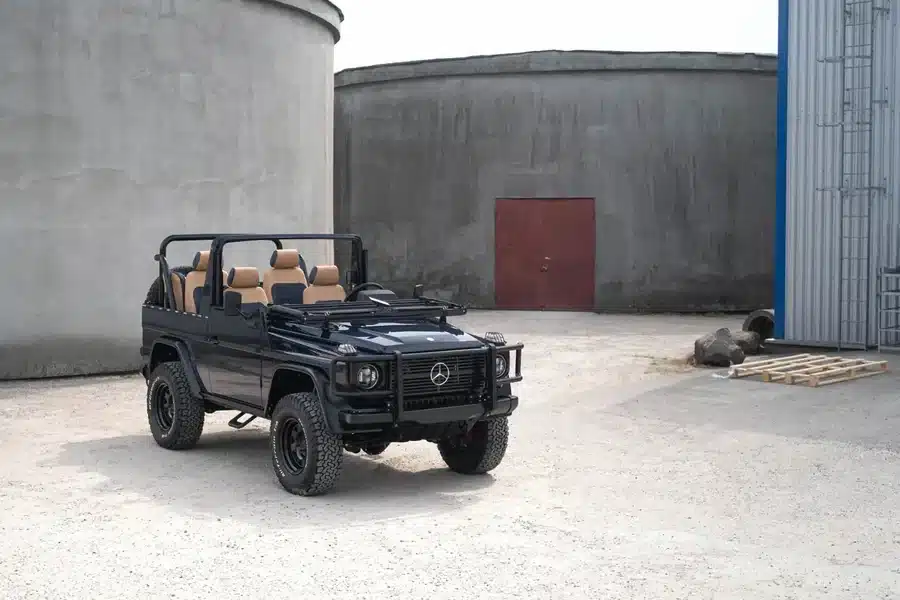
A military-spec truck isn’t usually where luxury collector interest begins. But the Mercedes-Benz 250GD Wolf has become one of the more sought-after platforms in the classic four-wheel-drive segment — and the reasons why say something interesting about how collector markets evolve. What started as a purpose-built government vehicle has quietly turned into one of the most compelling restoration opportunities in the classic truck world.
The Origins of the Wolf
The Wolf designation refers to a specific short-wheelbase variant of the classic G-Class produced primarily for military and government use across multiple countries. Its name came from Bundeswehr service, where it was deployed as a light utility vehicle capable of handling terrain that standard trucks couldn’t manage. The mechanical setup was simple, durable, and deliberately unadorned — which is precisely what collectors now find so appealing.
Unlike civilian G-Wagons from the same era, the Wolf was built without the refinements that typically soften a vehicle’s character. There were no leather seats, no wood trim, no unnecessary weight added for comfort. It was engineered for function first and everything else never. That purity of purpose translates into a driving experience that modern vehicles — regardless of price — simply can’t replicate.
Why Collectors Are Taking Notice
Growing collector interest in the mercedes 250gd platform reflects a broader shift in what enthusiasts are looking for. The era of chasing horsepower numbers and trim levels has given way to demand for provenance, authenticity, and mechanical simplicity that can actually be understood and maintained by the owner.
The 250GD Wolf satisfies all three criteria. Its diesel engine is robust and well-documented. Its history is traceable. And its visual presence — the canvas top, the spare tire mounted on the hood, the flat military finish — communicates something that no amount of modern restyling can manufacture. These are vehicles that look exactly like what they were built to be, and that honesty is increasingly rare in a market full of heavily styled alternatives.
Additionally, the Wolf’s global military deployment history means examples exist in many countries, each with slightly different specifications depending on which branch of service they were built for. That variation creates genuine collectibility — certain configurations are rarer than others, and knowledgeable buyers seek out specific build specifications the way watch collectors pursue limited-production references.
Restoration and the Path to Modern Usability
Builders specializing in this platform have developed increasingly sophisticated approaches to bringing these vehicles up to modern usability standards while preserving what makes them distinctive. Air conditioning, modern audio, and upgraded suspension systems can be integrated without compromising the integrity of the original chassis. The goal is reliability for daily use without erasing the mechanical identity that gives the Wolf its value.
The restoration process typically involves a full mechanical inspection, drivetrain rebuild, and careful attention to the body and frame — areas where decades of use can create issues that only become apparent to an untrained eye after purchase. This is why buyers are increasingly gravitating toward fully restored examples rather than project vehicles. The cost difference at entry is real, but the total cost of ownership over time favors the well-restored platform.
What to Look For When Buying
For collectors entering this space, the most important advice is to prioritize build quality over low purchase price. A 250GD Wolf that has been properly restored costs more upfront but delivers far fewer headaches and far greater long-term value than a cheaper alternative that hasn’t received the same level of attention.
Documentation matters enormously. The best examples come with clear records of what work was performed, which components were replaced, and by whom. Provenance — knowing where a vehicle spent its service life — adds both historical interest and practical insight into what kind of wear it may have experienced. A vehicle that spent years in dry conditions will present differently than one exposed to coastal environments or heavy seasonal use.
The Market Outlook
The market has spoken clearly on build quality. Well-executed examples continue to appreciate while neglected ones stagnate. In that respect, the Wolf is behaving exactly like every other serious collector vehicle in history — quality and provenance are rewarded over time, and shortcuts taken at acquisition tend to compound into problems down the road.
For anyone considering entry into the 250GD Wolf segment, the window of opportunity that exists today — before broader mainstream awareness fully catches up to where serious collectors already are — is worth taking seriously. The platform’s combination of military heritage, mechanical simplicity, and visual distinctiveness positions it well for continued appreciation in the years ahead.