

The Cognitive Benefits of Bilingual Early Education
San Mateo families rarely need convincing that a second language is worth something. Many are already raising kids across two languages at home. The question that comes up more often in preschool tours is narrower:…
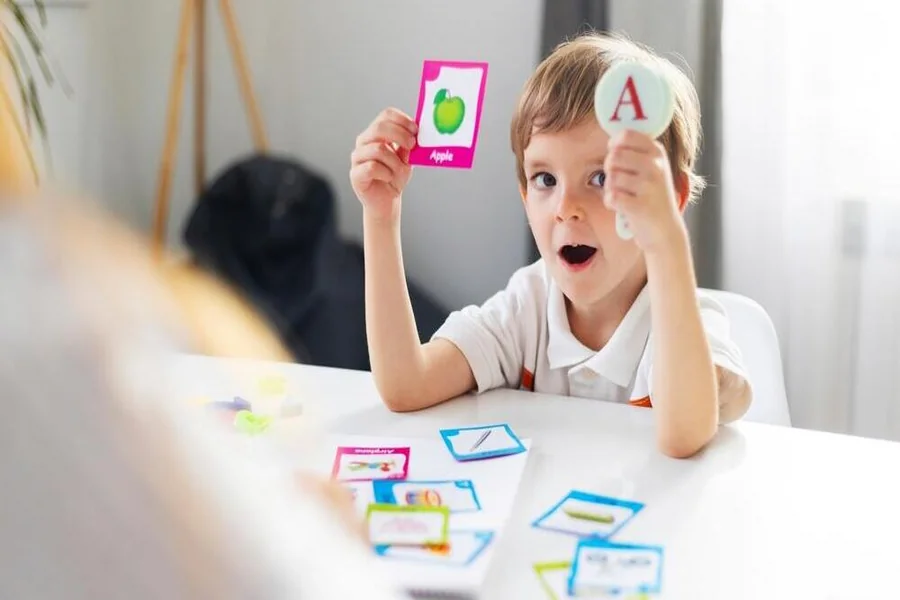
San Mateo families rarely need convincing that a second language is worth something. Many are already raising kids across two languages at home. The question that comes up more often in preschool tours is narrower: does learning two languages at once actually change how a young child’s brain develops, or is “bilingual curriculum” mostly a marketing label?
The research has a real answer, and it’s more specific than most brochures let on.
What’s Actually Happening Cognitively
A child juggling two languages isn’t doing double the work in some vague sense. Specific mental muscles get exercised that a monolingual child’s brain doesn’t use in the same way.
Research summarized by ZERO TO THREE points to stronger working memory in bilingual children, the capacity to hold and juggle information over short stretches of time. Executive function shows a similar pattern: better ability to think flexibly, hold attention, and tune out distractions.
One study went further and found dual language learners were better at reading other people’s perspectives than their monolingual peers. That’s not a small finding. Perspective-taking touches everything from playground conflict to how a kid eventually handles disagreement as an adult.
Where the Science Gets Honest About Its Limits
Not every claim floating around about bilingual brains holds up under scrutiny, and it’s worth saying so plainly.
A comprehensive review of cognitive development in bilingual preschoolers found real, strong evidence in some areas and genuinely inconclusive results in others. Bilingualism seems to sharpen particular cognitive skills. It doesn’t function as a blanket intelligence boost, and claiming otherwise oversells what the data supports.
What actually moves the needle in these studies: proficiency level, which two languages are involved, how early exposure starts, and how good the instruction is. Change any one of those and outcomes shift. That’s a big part of why one study finds a strong effect and the next finds almost nothing.
Separating a Real Program From a Label
A lot of preschools slap “bilingual” on their marketing without the classroom actually delivering it. A few things separate the real thing from the label.
- Both languages show up daily and consistently, not as an occasional song or a vocabulary worksheet once a week
- Teachers are fluent, not reading off a translated lesson plan someone else wrote
- Language exposure runs through the whole day, not boxed into one 30-minute “language block”
Families exploring San Mateo options can look at how https://www.primroseschools.com/schools/san-mateo structures its daily language exposure before enrolling, since that structure is exactly what determines whether a program delivers on the label.
A Word on Screen-Based “Bilingual” Apps
Plenty of language apps and videos market themselves as a bilingual head start. Worth knowing: the research behind bilingual cognitive gains is built almost entirely on live, interactive exposure, a teacher responding to a child in real time, not a screen playing vocabulary in the background. An app might teach a handful of words. It won’t replicate what a classroom immersion program does for working memory or executive function, and treating the two as interchangeable sets up unrealistic expectations for what a child will actually walk away with.
Three Questions Parents Ask Almost Every Time
Will two languages delay speech? No, and this is one of the more stubborn myths in early education. Kids might mix languages mid-sentence for a while. That’s code-switching, a normal phase, not a delay, and it fades as vocabulary builds in both languages.
Does my child need to already speak both languages? Not at all. Most dual-language programs are built for kids walking in with zero exposure to the second language. Proficiency builds gradually through consistent, age-appropriate immersion.
How fast will I see results? Slower than most parents expect going in. Meaningful cognitive and language gains tend to show up after a year or more of consistent exposure, not within the first few weeks. This is a multi-year investment, not a quick fix.
What a Program Doing It Right Actually Looks Like
Picture a classroom where the morning greeting happens in one language, snack time conversation drifts into the other, and a story gets read in whichever language the teacher’s working in that day, deliberately, not randomly. That’s immersion. Compare that to a single 20-minute “Spanish time” bolted onto an otherwise English-only day, and the difference in what a child actually absorbs becomes obvious fast.
The cognitive case for early bilingualism holds up in several specific, well-documented areas. What matters for any individual family is less about finding a school that claims bilingual instruction and more about finding one that can actually describe, in concrete daily terms, how that exposure works.