

Understanding Liability After a Commercial Truck Accident
Ever noticed how a commercial truck crash brings traffic to a dead stop in seconds, but the legal questions take months—or years—to untangle? From a distance, it looks simple. Metal, noise, sirens, confusion. Then everything…
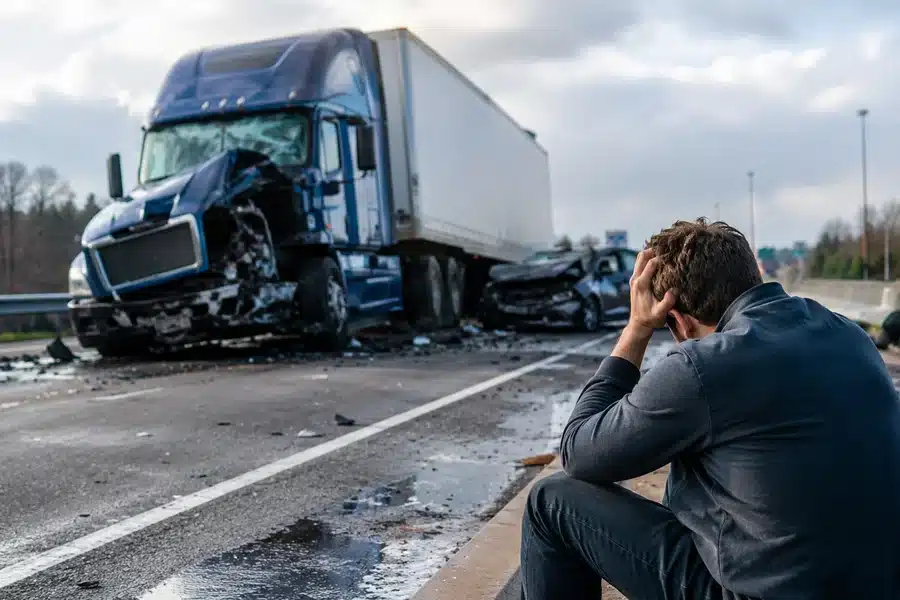
Ever noticed how a commercial truck crash brings traffic to a dead stop in seconds, but the legal questions take months—or years—to untangle?
From a distance, it looks simple. Metal, noise, sirens, confusion. Then everything quiets down and the real questions start crawling in. Who’s responsible? Who pays? And why does it feel like every answer leads to three more questions?
There’s no neat version of this story. So, let’s walk through how liability actually works after a commercial truck crash and why it spreads further than most people expect.
What Liability After a Truck Crash Actually Means
Liability after a truck crash is really about legal responsibility — but that phrase feels too clean for what actually happens on the ground. It’s not just “who hit who.”
It’s more like… who made the conditions for this to happen, even indirectly. And those conditions stack up quietly. A driver on hour eleven of a shift. A maintenance check that got delayed. A dispatch schedule that looked fine but didn’t feel realistic on the road.
The NHTSA recorded over five thousand deaths involving large trucks in 2024 in the United States. That number doesn’t explain causes, but it does frame the scale of what we’re dealing with. These aren’t rare, isolated moments. They ripple.
Still, liability doesn’t land in one place. It spreads.
Who Can Actually Be Held Responsible
Here’s where things start to split apart. Slowly at first, then all at once.
You might think it’s just the driver. Sometimes it is. But commercial trucking rarely works in isolation. There’s a whole system behind every mile driven.
Here’s a breakdown of the parties that might share liability.
(i) The Driver
Fatigue is a recurring factor. Long routes, tight deadlines, unpredictable traffic. Even within legal limits, exhaustion creeps in. You’ve probably felt it yourself on a long drive — that slow blur where reaction time just… dips.
Now imagine doing that for hours, under pressure.
Not ideal. But it happens.
(ii) The Trucking Company
In major cities, trucking companies can also share liability for these crashes.
Take Kansas City as an example.
A crash on I-70 might look like a single-driver mistake at first glance. But then schedules come out, delivery pressures, maintenance logs… and a different picture starts forming. After a commercial truck accident, determining liability often requires reviewing driver logs, maintenance records, company policies, and other evidence that may not be immediately available to victims. That’s why many injured people turn to truck accident attorneys KC when trying to understand who may be responsible for a crash.
A KC attorney can step in, pull records, and start connecting what actually happened behind the scenes—not just what shows up in a police report.
(iii) Maintenance Contractors
A worn brake pad. A tire that should’ve been flagged weeks ago. These things don’t always announce themselves loudly.
Sometimes there’s a warning. Sometimes there isn’t.
Still, when something fails on the road, investigators trace it backward — and maintenance records suddenly matter a lot more than they did the day before.
(iv) Manufacturers
Less frequent, but when it appears, it changes the entire direction of a case.
A defective part can pull liability away from everyone else and place it on design or production. One faulty component, thousands of miles later… and suddenly the story looks different.
Kind of unsettling when you think about it.
Why Liability Cases Feel So Layered in Real Life
There’s a moment in almost every truck crash investigation where things stop lining up cleanly.
A driver remembers one version. A company report suggests another. Data logs sit in between, neutral but incomplete. And you’re left trying to stitch together something that’s already fractured.
The Insurance Institute for Highway Safety reports that about 65% of fatalities in large-truck crashes involve occupants of other vehicles, not the truck itself. That detail shifts everything. It widens the scope of responsibility beyond the cab, beyond the moment of impact.
Still, what makes it feel layered isn’t just data. It’s timing.
Decisions made weeks earlier suddenly carry the same weight as seconds on the road. That mismatch… it sticks.
The Reality Behind Truck Accident Liability
Truck crash liability doesn’t sit still. It drifts across people, companies, systems, and decisions that often started long before anyone hit the brakes.
And even after everything is reviewed, something lingers — the uncomfortable awareness that what happened was never about a single moment, but a chain of them… quietly lining up until they weren’t quiet anymore.