

How to Estimate the Cost of Migrating Data Lakes to a Cloud Analytics Platform
The process of moving a data lake to a new cloud analytics system is no longer a technical upgrade. It is a tactical step toward more insights within a shorter time, scalability, and reduced costs…
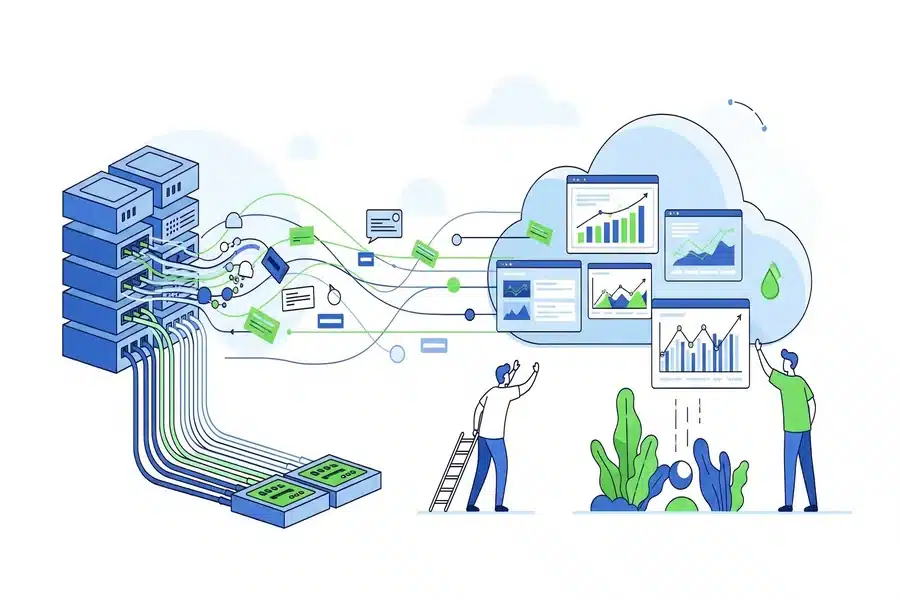
The process of moving a data lake to a new cloud analytics system is no longer a technical upgrade. It is a tactical step toward more insights within a shorter time, scalability, and reduced costs in the long run. Nonetheless, the critical but simple question that organizations should respond to before initiating such a migration is how expensive it will be.
In reality, the cost of data lake migration is usually underestimated. Budgets can easily get out of check due to hidden complexity, legacy technologies and undefined usage pattern. This paper will describe the steps to estimate the cost of moving a data lake, the factors that affect the final cost, and how Databricks migration services can assist organizations to manage the cost and risk.
What Does Data Lake Migration Really Involve?
The general misunderstanding is that the process of data migration to a data lake mostly involves the transfer of data between one environment and another. As a matter of fact, it is much more than data transfer.
A typical migration includes:
- Moving raw and curated data to cloud object storage
- Refactoring ETL and ELT pipelines
- Migrating analytics, BI, and machine learning workloads
- Redesigning security, governance, and access controls
- Testing, validation, and parallel runs
- Change management and enablement for data teams
All these aspects add up to the total cost of migration. The realistic estimate should consider technology, engineering effort, and organization change, but not only cloud infrastructure.
Step 1: Assess Your Current Data Lake Landscape
The most important cost driver is the current state of your data lake. Before estimating migration costs, you need a clear inventory of what you are migrating.
Key questions to answer:
- How much data do you have (terabytes vs petabytes)?
- What types of data are stored (structured, semi-structured, unstructured)?
- How many pipelines and jobs are running?
- What technologies are in use (Hadoop, Hive, Spark, Presto, custom scripts)?
- How many users and workloads depend on the data lake?
The environment Legacy Hadoop-based environments typically do not need a lift-and-shift, but rather a substantial amount of refactoring. Moving forward, the more pipelines and dependencies, as well as custom logic, you have, the more effort is needed in migration.
Why this matters:
Accurate scoping at this stage prevents surprises later. Databricks migration assessments help organizations quantify complexity early and create a realistic migration roadmap.
Step 2: Choose the Right Migration Approach
Migration cost depends heavily on how you migrate, not just what you migrate.
Lift-and-Shift
This approach focuses on moving workloads with minimal changes.
- Lower upfront engineering effort
- Faster initial migration
- Often results in higher long-term compute and maintenance costs
Modernization (Recommended)
This involves refactoring pipelines to use modern cloud-native capabilities.
- Migration to Apache Spark and Delta Lake
- Better performance, reliability, and scalability
- Higher upfront effort, but lower total cost of ownership
A hybrid approach is a more common practice in which many organizations manage the migration of important workloads rapidly, but move at a slower pace in terms of modernization. Databricks is beneficial to this approach as it can be optimised gradually without affecting the operations.
Step 3: Estimate Cloud Infrastructure Costs
Once workloads move to the cloud, infrastructure becomes an ongoing cost component.
Storage
- Object storage costs (Amazon S3, Azure Data Lake Storage, Google Cloud Storage)
- Data formats (Delta Lake reduces duplication and improves efficiency)
Compute
- Batch processing
- Interactive analytics
- Machine learning workloads
- Autoscaling vs fixed clusters
Data Transfer and Networking
- One-time data movement costs
- Ongoing cross-region or cross-cloud traffic
Databricks’ separation of storage and compute, combined with autoscaling, helps optimize resource usage and avoid overprovisioning, a common source of unexpected cloud spend.
Step 4: Account for Migration Execution Costs
Infrastructure is only part of the equation. Execution costs are often underestimated and can represent a significant portion of the budget.
These include:
- Engineering time for pipeline migration and refactoring
- Testing, validation, and reconciliation
- Parallel run periods to ensure data consistency
- Downtime mitigation and rollback planning
Hidden costs often arise from:
- Poor data quality discovered during migration
- Underestimated testing cycles
- Limited internal expertise in Spark or cloud-native analytics
These risks are minimized by databricks migration services which offer proven accelerators, reference architectures as well as skilled engineers who have already migrated into the same environment.
Step 5: Include Governance, Security, and Compliance Costs
Governance is frequently overlooked in early cost estimates, yet it is essential for enterprise-scale analytics.
Migration may require:
- Redesigning access controls and permissions
- Implementing data lineage and auditing
- Meeting regulatory requirements such as GDPR or HIPAA
Databricks simplifies this area with Unity Catalog, which centralizes governance across data, analytics, and AI workloads: reducing operational overhead and long-term compliance costs.
Step 6: Build a Total Cost of Ownership (TCO) Model
A meaningful cost estimate should compare before and after migration, not just the migration itself.
Your TCO model should include:
- Legacy infrastructure and licensing costs
- Cloud and Databricks platform costs
- Engineering and maintenance effort
- Productivity gains for data teams
- Faster time to insight for the business
The cost of migration in itself is not the whole story. With many organizations taking an interest in TCO, it is common that increased initial investment is associated with highly reduced long-term costs and increased business value.
Conclusion
Migration of a data lake to a cloud analytics provider is not a storage and compute calculation that is sufficient to estimate its cost. It requires a deliberate evaluation of your present condition, an easy-to-follow change plan and a reasonable perception of execution and governance work.
When companies take time to estimate their costs correctly and trust Databricks services of migration, companies avoid unforeseen overruns, minimize the risk, and achieve the maximum benefit of modern cloud analytics.
In case you intend to perform a data lake migration, consider beginning with an evaluation, constructing an open-minded cost model, and selecting a platform that will be available to handle the desired scales, performance, and long-term efficiency.