

Are Celebrities Fueling the GLP-1 Craze?
What if the biggest driver of medical trends isn’t medicine at all… but visibility? That question keeps popping up lately. You see it in headlines, sure, but also in quieter places — someone at a…
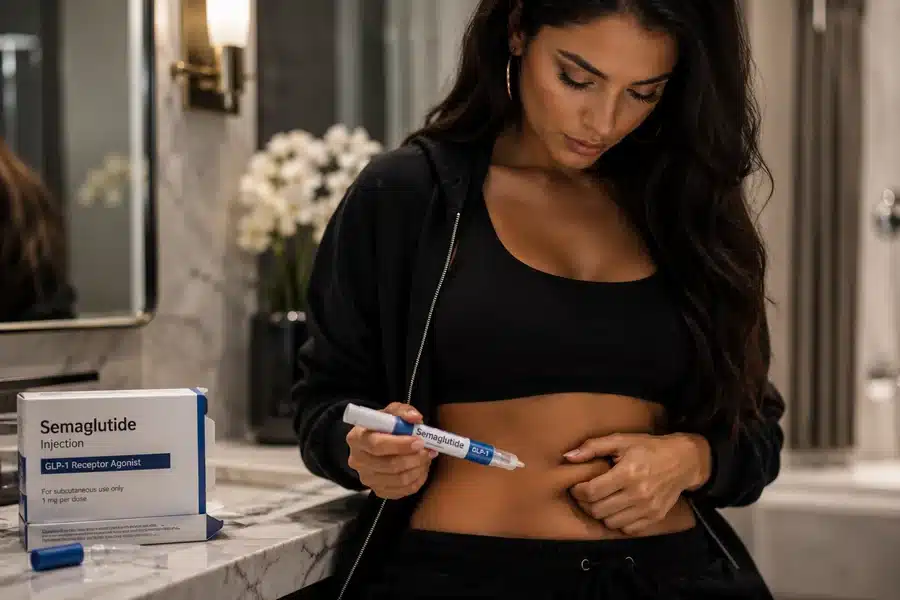
What if the biggest driver of medical trends isn’t medicine at all… but visibility?
That question keeps popping up lately.
You see it in headlines, sure, but also in quieter places — someone at a bus stop scrolling through TikTok, pausing on a transformation video, then searching the name of a medication they’d never heard of a year ago. Strange how fast things move now.
KFF estimates that about 12% of U.S. adults have used a GLP-1 medication. That’s not a fringe stat anymore. It’s a shift. And it makes you wonder… what’s actually pushing all this attention?
Let’s walk through it.
The Search for Answers
Nobody really wakes up thinking, I want a trending medication today.
It starts smaller. A reflection in the mirror that lingers a bit too long. A doctor’s comment that sits in your head on the drive home. Or just that tired feeling after years of trying and stopping and trying again. You know that rhythm — start strong, fade out, repeat.
That’s partly why more people are now looking into structured medical pathways, including prescription weight loss solutions, where clinicians review whether FDA-approved treatments like GLP-1 medications might actually fit a person’s health profile.
Not hype. Not guesswork. More like… guided decisions in a space that used to feel like trial and error. Still, the conversation rarely stays clinical.
A celebrity mentions weight loss on a podcast. A photo circulates. Suddenly, everyone’s talking.
Funny how that works.
The Craze Didn’t Start in Hollywood
Here’s where things get a bit distorted in public perception.
Celebrities didn’t create the demand. They walked into it.
The U.S. Centers for Disease Control and Prevention reports that more than 40% of American adults live with obesity. That’s a structural, long-running health reality — not a media moment.
Walk into a pharmacy in Nairobi or New York or London, and you’ll notice the same quiet pattern. People standing slightly too still, waiting for prescriptions. Phones in hand. Sometimes scrolling, sometimes just staring at the floor tiles.
That part gets overlooked.
Still, celebrity visibility changes the volume. It turns private health conversations into public speculation. And suddenly, something that was medical becomes cultural.
Results That Turn Heads
Let’s talk numbers — because this is where things start to feel very real.
A major clinical trial published in the New England Journal of Medicine found that participants using semaglutide lost an average of 14.9% of their body weight over 68 weeks, compared with 2.4% in the placebo group.
That gap is hard to ignore.
You hear it in conversations afterward. At work. At home. Even in places like supermarket queues, where people compare notes quietly, almost cautiously.
Not dramatic. Just… curious.
And curiosity spreads faster than facts sometimes. A friend mentions it. Another asks questions. Someone else Googles it during a lunch break while the sound of traffic slides through an open window.
What the Headlines Sometimes Miss
This is where the story gets less shiny.
GLP-1 medications can come with side effects like nausea, vomiting, or digestive discomfort. Some people adjust quickly. Others don’t. Access can also be uneven — insurance rules, supply shortages, costs that don’t always make sense at first glance.
There’s also something quieter going on.
People aren’t always chasing changes in appearance. Some are trying to manage blood sugar. Others are dealing with cardiovascular risk or fatigue that’s been creeping in for years.
Different starting points. Same destination: relief.
Still, media coverage tends to lean toward dramatic transformations. Before-and-after photos. Headlines that feel almost too clean.
Real life? Never that tidy.
So…Are Celebrities Fueling the GLP-1 Craze?
Yes. But it’s not the whole engine.
Celebrities act more like amplifiers than originators. They speed up what was already building beneath the surface — millions of people searching, asking, trying, restarting.
Maybe that’s the real shift here.
Not fame-driven medicine. But medicine entering a moment where visibility is unavoidable… and everything gets seen, shared, and reinterpreted in real time.
And somewhere in all of that noise, a quieter question keeps hanging in the air.
What actually changes behaviour — the science… or the story we tell about it?