

How Digital Advertisers Use Ad Verification Proxies to Catch Placement Fraud Before It Costs Them
Digital advertising fraud is not a niche problem. Industry estimates consistently put global ad fraud losses in the tens of billions of dollars annually, and the number keeps climbing as programmatic buying becomes more automated…
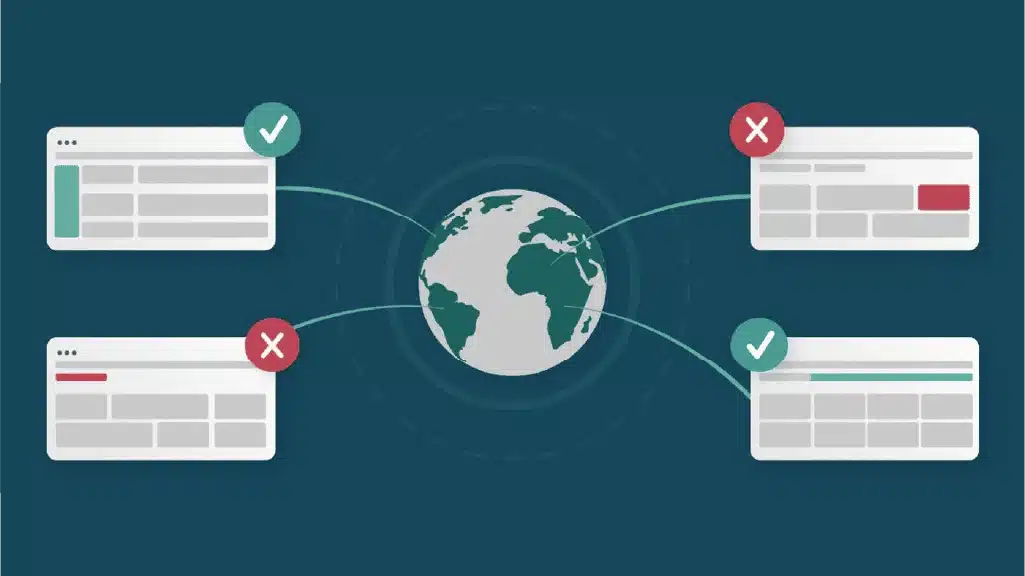
Digital advertising fraud is not a niche problem. Industry estimates consistently put global ad fraud losses in the tens of billions of dollars annually, and the number keeps climbing as programmatic buying becomes more automated and the supply chain between advertiser and publisher grows longer and harder to audit.
Placement fraud — where ads appear in contexts that were never approved, never seen by real users, or actively misrepresented to the buying platform — sits at the centre of this problem. And for most advertisers, it goes undetected until the damage is already done.
The reason it’s hard to catch is structural. When you buy programmatic inventory, you’re not selecting individual placements. You’re setting targeting parameters and letting an algorithm distribute your budget across a pool of available inventory. The platform reports back on impressions, clicks, and conversions. Those numbers can look healthy while a portion of your spend is going to placements that were never what they appeared to be.
Catching it requires looking at the placements directly, from the right location, before the bill arrives.
What Placement Fraud Actually Looks Like
Placement fraud takes several forms, and different types require different verification approaches.
Domain spoofing is one of the more common. A low-quality publisher misrepresents their inventory as belonging to a reputable domain, so advertisers buying premium inventory end up on sites they would never knowingly fund. The platform reports the impression as delivered on the spoofed domain. Your brand appears somewhere else entirely.
Ad stacking involves multiple ads placed on top of each other in a single placement. Only the top ad is visible to a human user, but all the ads in the stack register as impressions. An advertiser pays for a viewable impression that no one actually saw.
Geo-fraud is a variation specific to location-targeted campaigns. A publisher claims their audience is in a high-value market — the US, UK, or Germany — but the actual traffic comes from lower-value regions where the inventory would sell for a fraction of the price. The advertiser pays premium rates for an audience they weren’t targeting.
Invisible ads are placed in hidden iframes or positioned off-screen, generating impression data while never being visible to anyone. The tracking pixels fire, the impression counts, and nothing real happened.
In each case, the fraud is designed to pass through automated verification systems. What it can’t easily survive is a human looking at the actual page from the actual location where the ad was supposed to appear.
Why Location Matters for Verification
Most advertisers check their ad placements occasionally. They search for their brand terms, visit relevant sites, and look for their ads. The problem is that this approach only works if you’re in the right location.
Ad serving is location-dependent. What appears on a results page or a publisher site in New York is not the same as what appears for the same page in Frankfurt or São Paulo. If your campaign targets German users and your verification team is in New York, searching from a New York IP shows you the New York version of the internet. Your German placements remain invisible.
This is how geo-fraud persists. The advertiser sees their campaign running when they check it from their office. The misrepresented traffic is happening elsewhere, in markets the advertiser can’t directly observe without simulating presence there.
How Proxies Solve the Visibility Problem
A residential proxy routes your requests through an IP address assigned to a real device in a specific location. When you connect through a residential proxy in Hamburg, the sites you visit see a Hamburg IP. The ads that load, the placements that appear, the content context — all of it reflects what a genuine Hamburg user would see.
This is the core function of ad verification proxies: they give advertisers eyes inside the markets they’re targeting, without requiring a physical presence or a local employee to manually check placements.
The distinction between residential proxies and datacenter proxies matters here. Datacenter IPs are well-known to publishers and ad platforms. Many sites detect and filter datacenter traffic, serving a different experience — or no experience at all — when they identify it. A verification check using a datacenter proxy may show you nothing, or show you a sanitised version of the page that doesn’t reflect what real users see. Residential IPs pass through without triggering those filters, which is why they’re the standard for verification work.
Building a Verification Process That Catches Problems Early
Ad fraud doesn’t announce itself. The way most advertisers discover it is through anomalies in performance data — a campaign with unusually high impressions but no downstream conversions, a placement that generates clicks but no engaged sessions. By that point, budget has already been spent.
A proactive verification process catches the same problems before the spend accumulates.
For programmatic campaigns, this means spot-checking placements across the sites in your target inventory from inside the target regions. Not every placement, every day — but a structured sample, run regularly enough that problems surface quickly. If a new site appears in your placement reports, check it. If a campaign is spending faster than expected, check what it’s buying.
For paid search campaigns, it means verifying from inside the target market that your ads appear for the keywords you’re bidding on, in the positions your spend suggests they should occupy, and that they link to the correct destination. Search results are personalised and localised, so off-location checks produce unreliable results.
For display campaigns running against brand-safety criteria — no adjacency to controversial content, no placements on specific site categories — verification means loading the sites in your reports and confirming the content context. Automated brand-safety tools miss things. A human eye on a page from the right location catches more.
The Cost Comparison
Proxy-based verification requires some setup — choosing a proxy provider, integrating with your workflow, defining which placements to check and how often. That involves time and a modest ongoing cost per gigabyte of traffic.
The alternative is absorbing placement fraud as a cost of doing business. For large campaigns, that number is not modest. Even conservative industry estimates suggest that several percent of programmatic spend goes to fraudulent or non-viewable inventory. On a significant budget, several percent is a number worth protecting.
The advertisers most exposed to placement fraud are typically those running the largest programmatic campaigns across the most markets, with the most automated buying and the least manual oversight. Verification tooling is not just a fraud protection measure — it’s the mechanism that makes large-scale automation auditable.
What Verification Doesn’t Replace
Proxy-based ad verification is one layer of a broader approach, not a complete solution on its own.
Pre-bid filtering — blocking known fraudulent domains and inventory before buying it — reduces exposure before it happens. Third-party verification vendors provide automated scanning at scale. Platform-level controls and whitelisted publisher lists reduce the range of inventory your budget can reach.
Proxy verification sits alongside these tools as the method that answers a question none of the others can fully answer: what does my ad actually look like, on this site, in this location, right now? It’s the check that confirms everything else is working the way it’s supposed to, and catches the cases where it isn’t.
For advertisers running geo-targeted campaigns across multiple markets, that check isn’t optional. It’s the difference between trusting the report and knowing what the report describes.